The Hudson River, stretching more than 300 miles through New York State, is one of America’s most iconic waterways. Yet behind its scenic beauty lies a long, troubling legacy of industrial contamination. From the mid-20th century onward, decades of unchecked chemical discharges have left the river deeply polluted, and efforts to clean it up remain complex and ongoing.
One of the main reasons the Hudson River is so contaminated is due to the dumping of the polychlorinated biphenyls (PCBs), toxic industrial chemicals used by General Electric (GE) in electrical manufacturing. From 1947 to 1977, GE released around 1.3 million pounds of PCBs into the river from two of its plants in Fort Edward and Hudson Falls. PCBs are especially dangerous because they fail to break down in nature and can affect fish and wildlife. When humans eat contaminated fish, chemicals enter our bodies and can cause serious health problems. PCBs have been linked to cancer, hormone disruption, immune system damage, and developmental issues, especially in children and pregnant women. Scenic Hudson, a nonprofit dedicated to revitalizing the Hudson Valley, explains, “Women exposed to PCBs are likely to give birth to infants of low birth weight, who in turn suffer more from reduced IQs and behavioral problems.” In addition, river pollution has hurt local economies by damaging the fishing industry, reducing tourism and holding back riverfront development.
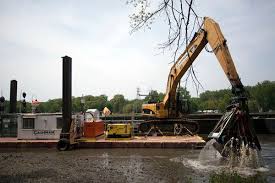
To address the Hudson River’s toxic contamination, the Environmental Protection Agency (EPA) and General Electric carried out a massive dredging project between 2009 and 2015, focusing on a 40-mile stretch of the Upper Hudson from Hudson Falls to the Federal Dam at Troy. The effort removed a staggering volume of toxic material which was then disposed of in a confined facility. EPA reports, “In all, over six seasons of dredging, approximately 2.75 million cubic yards of PCB-contaminated sediment were removed from the river bottom.” After dredging, GE restored river habitats and decommissioned its processing facility. The project has since shifted to long-term monitoring, including sediment, water, and fish testing, as well as five-year reviews. Despite the scale of the operation, many experts argue that contamination remains in areas like the floodplains and Lower Hudson, warranting further investigation.
The Hudson River clean up came with a huge price tag—more than hundreds of millions of dollars were contributed to the project. Although it was all paid for by GE as part of a legal agreement with the EPA, many argue that the money alone does not make up for decades of damage. Scenic Hudson states, “The toxins led to the shutdown of a commercial fishing industry that generated $40 million annually, and they forced communities depending on the river for drinking water to spend $10 million a year to make it safe for consumption.” PCBs continue to affect fish, water and even soil along the rivers’ floodplains. Although GE claims it met its responsibilities by completing the dredging project, the Department of Environmental Conservation disagrees. They believe the company should also be held accountable for cleaning up areas that were not included in the original plan.
Despite the massive scale of the dredging effort, recent data shows the Hudson River remains dangerously polluted, proving that the job is far from finished. According to the Sierra Club, “The recent report revealed that, as of 2021, the average Hudson River fish still had a PCB concentration of 0.71 ppm. This number dropped to 0.58 ppm in 2022, representing some progress. But in certain fish species, such as catfish, these concentrations are nearly 2ppm.” These persistently high levels continue to pose serious health risks and keep strict fish consumption advisories in place. Former EPA administrator Pete Lopez emphasized, “There’s some migration of [PCBs], and the contamination levels remain unacceptably high.” Many scientists and environmental advocates believe that without additional dredging and remediation in the floodplains and Lower Hudson, recovery will stall and the millions of people who live, work and fish along the river will remain at risk.
Although the previous cleanup was led by the EPA and GE, public pressure plays a major role in continued improvements. Groups like Scenic Hudson and Riverkeeper have pushed for decades to hold polluters accountable. Today, students and community members can help by joining cleanups, supporting advocacy groups and contacting local officials.
The Hudson is more than just a river; it is a shared resource, a symbol of environmental justice, and a reminder of what happens when pollution goes unchecked. If people continue to speak up and push for progress, the river will have a chance to thrive and remain a resource for future generations.