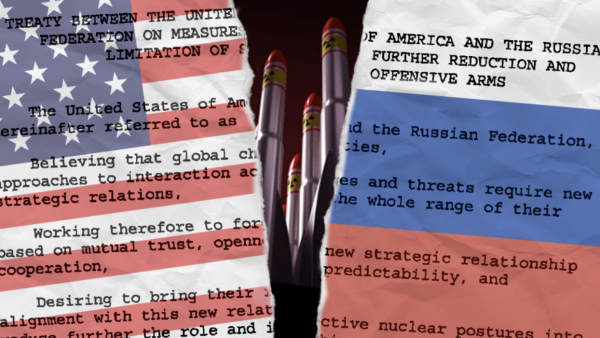
The Strategic Arms Reduction Treaty (START) was signed into effect on July 31, 1991 by the United States and the Soviet Union. This treaty was the first to require U.S. and Soviet reductions of strategic nuclear weapons, enhancing U.S. national security by placing verifiable limits on all Russian deployed intercontinental-range nuclear weapons.
The treaty’s initial duration only lasted until February 5, 2021, but the initial signers were able to extend it to February 4, 2026. Unfortunately, as this five-year extension came to a close, worries arose with regards to national security.
UN Secretary-General António Guterres warned that we may face a “grave moment,” stating, “For the first time in more than half a century, we face a world without any binding limits on the strategic nuclear arsenals” between the two nations. Guterres outlined that “…throughout the Cold War and in its aftermath, nuclear arms control between these governments helped prevent catastrophe.”
Officials at the U.S. Department of State stated, “We understand that this process can take time. Past agreements, including New START, took years to negotiate and were built upon decades of precedent…No one understands that difficult deals are often the only ones worth having more than President Trump, who has repeatedly underscored the awesome power of nuclear weapons and his desire to reduce global nuclear threats. Today in Geneva, we are taking the first steps into a future where the global nuclear threat is reduced in reality, not merely on paper. We hope others will join us.”