Protected but Polarized: The Tradeoff Between Safety and Open Dialogue
4/2/25
AP Seminar
Alivia Berishaj
Word Count: 2,094
Context
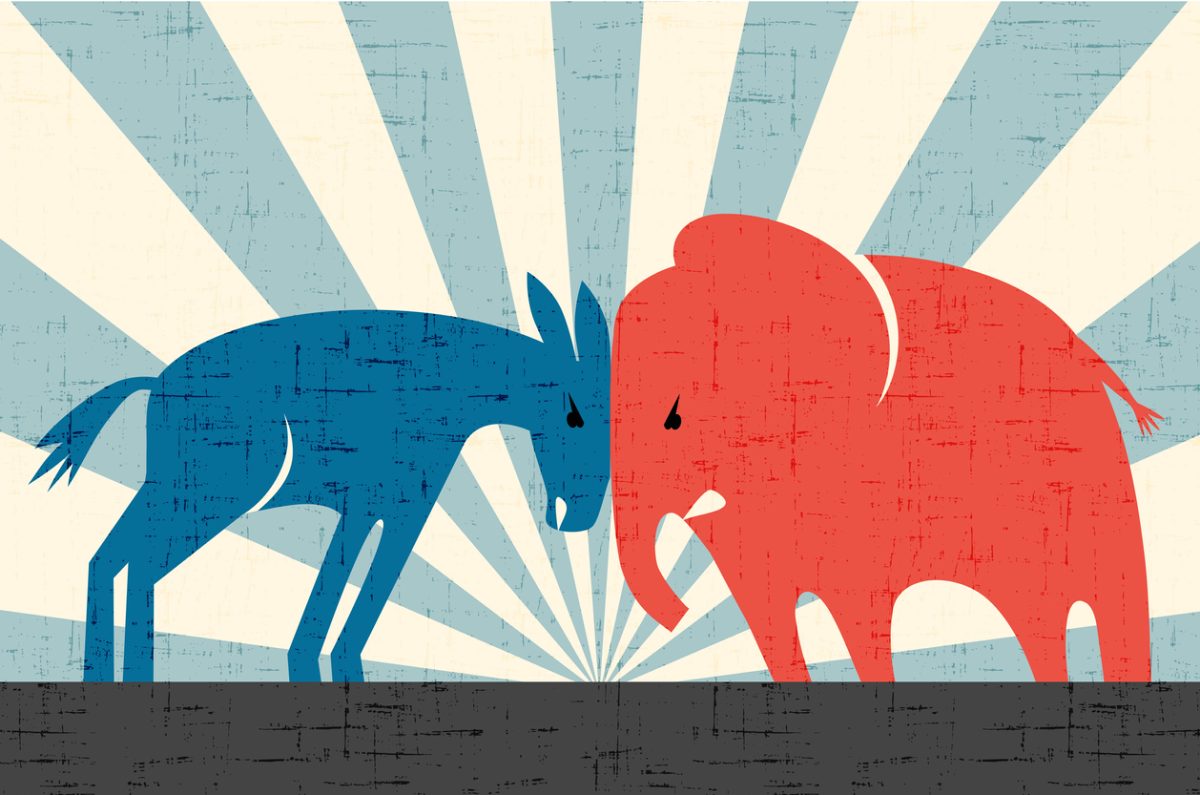
Over the past decade, the simple act of talking about politics has become increasingly tense. What was once a casual conversation can now feel like entering a battlefield of identity, emotion, and strong divisions. Research from Pew Research Center displays this divide, showing that nearly half of Americans align with each major political party and that ideological consistency has drastically grown over time (Pew Research Center). As these divisions deepen, hostility between the opposing groups has escalated and many Americans seem to view the other side as a threat to the country’s well-being. This growing polarization has reshaped both political institutions and daily interactions.
The Surgeon General’s Advisory reports that around 50% of adults in the U.S. experience social isolation, which increases the chance of heart disease, stroke, and even premature death (Office of the Surgeon General (OSG) 24–35). In trying to reduce emotional strain and social fragmentation, individuals are increasingly seeking environments that promote belonging, comfort, and psychological safety. Similarly, Ferreira et al.’s study of coffee shops as “third places” illustrates how shared social environments promote connection, reinforcing the human need for spaces where individuals feel safe to interact openly (Ferreira et al.). Together, they highlight an overarching tension. While psychologically safe spaces may be important for reducing isolation and fostering community, they also shape how and who people converse with.
This tension raises a critical question: To what extent does the rise of psychologically safe spaces inhibit democratic public discourse? Democratic discourse relies on the open exchange of different, distinct perspectives, but the increase of polarization and identity-based division may push individuals toward ideologically uniform environments. To a significant extent, psychologically safe spaces inhibit democratic discourse by reinforcing ideological echo chambers, intensifying identity-driven reasoning, and limiting exposure to opposing viewpoints. However, these spaces remain necessary in order to allow marginalized groups to participate in these conversations, suggesting that effective solutions must balance psychological safety with inclusive discourse.
Psychological Drivers of Avoidance
Psychologically safe spaces encourage individuals to hide from ideological conflict and avoid exposure to opposing viewpoints, which inhibit democratic discourse. Shanto Iynegar, a political scientist at Stanford University, explains that affective polarization in the U.S. has more than doubled since around 1970 (Iyengar et al.). The research further shows that Americans are increasingly perceiving members of the opposing political party poorly and in turn, actively avoid interaction with them. This avoidance becomes a behavioral response to growing emotional and social tension that surrounds political identity.
Samantha Moore-Berg, an Assistant Professor of Psychology at the University of Utah and Director of their Peace and Intergroup Conflict Lab, and her colleagues build on Iyengar et al. ‘s findings. They found that when ideological differences are moderate, people systematically overestimate the extremity of opposing views and perceive them as a threat (Moore-Berg et al.). This emotional hostility reinforces the retreat that Iyengar identified, creating a feedback loop where safe spaces become more enticing as they seem to be a utopia without conflict. By combining Iyengar’s study of avoidance with Moore-Berg’s psychological mechanisms, it is clear that the rise of safe spaces is closely intertwined with the emotional and cognitive dynamics of polarization.
Quantitative evidence from the Pew Research Center, a highly-regarded “fact tank”, situates these behaviors in a much broader, societal context. Since nearly half of Americans identify with each major party and conservative or liberal viewpoints have grown over recent decades, polarization has sky-rocketed (Pew Research Center). This polarization, when combined with the psychological tendencies displayed by the previous evidence, helps show why individuals prefer to self-segregate into like-minded groups. Safe spaces, then, shift from being neutral zones and institutionalize avoidance. This reduces exposure to diverse perspectives and reinforces ideological echo chambers. Psychologically safe environments may protect individual well-being, but they unintentionally limit the compromise necessary for healthy democratic discourse.
Echo Chambers, Identity, and the Social Dynamics of Safe Spaces
Psychologically safe spaces operate within broad social and communication structures that reinforce ideological clustering. Wang et al., computational social scientists, show that social networks naturally allow for highly clustered communities to form. In these communities, individuals are almost always interacting with like-minded peers. In their study, they found that echo chambers greatly reduce exposure to differing perspectives, making it much more likely that beliefs, whether they are true or not, are amplified instead of challenged (Wang et al.). This sociological model backs the psychological tendencies that Iyengar et al. and Moore-Berg et al found. Avoidance of opposing views is supported by social structures that group people around shared identities.
Jay Van Bavel and Andrea Pereira, cognitive scientists at NYU, extend this understanding by placing an emphasis on the role of identity in political cognition. Individuals process information in ways that reinforce their group loyalty and they accept information that aligns with their social or political identity and reject whatever conflicts with it (Van Bavel and Pereira). When safe spaces are designed around any type of identity, they reflect and reinforce these cognitive patterns, making it unlikely that participants will engage with alternate perspectives. This way, safe spaces function as a psychological and social mechanism that reinforce homogeneity.
As partisan identities become stronger and start to define social networks, the clustering described by Wang et al. and the identity biases shown by Van Bavel and Pereira become more noticeable. Safe spaces that encourage interaction with solely people from one group contribute to the same separation that fuels echo chambers online, linking individual psychological behavior with broader social patterns. While offering comfort, safe spaces also institutionalize separation, which reduces the diversity of interactions and creates social environments where cross-ideological dialogue is very rare.
Ethical Tension Between Safety and Free Expression
Safe spaces also raise significant ethical questions about the balance between democratic engagement and protection. Jaime Weida, a writer for the American Association of University Professors, argues that safe space policies in U.S. universities often restrict discussions of controversial topics, even if these discussions are relevant to their civic development of education. She explains that instructors tend to modify or avoid course material in an attempt to prevent discomfort (Weida). This limits students’ engagement with challenging ideas and harms U.S. democracy. If younger citizens, especially those around early voting ages, are barred from learning about the political state of the country, they might make uninformed decisions at polls or avoid voting altogether. This demonstrates the ethical tension that protecting participants’ psychological safety may conflict with critical thinking and debate.
Jordi Pujol, a communications and culture researcher, provides a perspective that frames safe spaces as a “paradox of freedom of speech.” His research documents cases where student groups demanded safe spaces to shield themselves from offensive speech, which resulted in formal restrictions on campus events or speakers (Pujol). For example, some universities cancelled lectures or moderated panels because they feared that some students might feel unsafe. This shows that ethical intentions, like protection from harm, can directly conflict with democratic norms of open discourse. This argument is situated within broader cultural polarization and furthers the argument that ethical decision-making about speech is extremely entangled with identity politics.
The psychological and sociological patterns amplify the ethical dilemma. Iyengar et al. show that avoidance behavior is already widespread due to affective polarization, and Wang et al. demonstrate that social networks cluster ideologically. Ethically motivated safe spaces risk regulating both psychological and social segregation, which creates environments where certain voices are shielded from challenges from opposing views. Safe spaces pose moral questions about the responsibilities of institutions to balance inclusion with exposure to diverse ideas, a balance central to the health of American democracy.
A Foundation for Inclusive Participation
Though safe spaces may seem mostly harmful, they play a crucial role in enabling participation, especially for individuals who feel excluded from political discourse. Kirsten Witherup and PJ Verrecchia, researchers who study human experiences during college, examined student and faculty perceptions of safe spaces and found that 46.4% of students and 43.4% of faculty generally thought that safe spaces encouraged positive learning environments (Witherup and Verrecchia). Their research shows that safe spaces reduce the fear of harassment and judgement. This allows individuals, especially those coming from marginalized communities, to engage in conversations they might otherwise avoid. Without safe spaces, certain voices get completely erased from discourse.
Samantha Moore-Berg et al. agree with Witherup and Verrecchia’s research. If people view political disagreements as emotionally or socially risky, they may avoid it entirely. Safe spaces can serve as a gateway into debate, reducing any psychological barriers that previously prevented participation.
Drivers of Political Engagement
Safe spaces are often criticized for limiting exposure to opposite ideas, but some research argues that the same dynamic associated with clustering can actually increase political engagement. Ursina Kuhn and Lionel Marquis, political scientists, used longitudinal data from 1999 to 2023 as part of their study. They found that higher levels of ideological polarization are associated with increased political participation (Kuhn and Maquis). When people become more committed to their political party, they are much more likely to vote and participate in government affairs in hopes that their party will come out on top. Even so, a limitation to the data found by Kuhn and Marquis is that it occurred in Switzerland, not the U.S., but the data can still be used to put American engagement into perspective.
Kuhn and Marquis build on Van Bavel and Pereira’s ideas. Political identity has great impacts on how people both process information and engage with politics. Individuals are more motivated to participate when political issues are tied to their sense of group identity. Safe spaces reinforce that shared identities may strengthen political motivation.
Rebalancing Participation and Discourse Quality
While safe spaces increase participation and political engagement, the benefits do not entirely address their impact on the nature of democratic discourse. Witherup and Verrecchia show that safe spaces make people more comfortable and Kuhn and Marquis found that polarization can increase political polarization, but both perspectives emphasized an increase in engagement without considering if that interaction is meaningful. Democratic discourse depends on sharing different perspectives, and participation that only occurs within a similar group does not promote understanding.
Research across psychological, social, and ethical lenses suggests that this type of engagement will ultimately deepen division instead of improve discourse and democracy. Wang et al. explain that individuals in clustered networks mostly interact with like-minded peers, while Van Bavel and Pereira show that identity-driven reasoning leads people to reject information that does not align with their party. Weida and Pujol demonstrate that prioritizing comfort will limit exposure, which reinforces Iyengar et al.’s research. Together, these findings show that safe spaces may produce a more active, but also more fragmented public. Here, engagement occurs simply in isolated groups rather than across different ones. Safe spaces expand participation, but they inhibit democratic discourse even more by reducing opportunities for compromise and collective problem solving.
Balancing Psychological Safety with Deliberative Exposure
Addressing the tension between democratic discourse and psychological safety calls for approaches that maintain inclusion while promoting exposure to diverse perspectives. One possible solution is developing structured discourse environments. Individuals would be able to engage with opposing viewpoints under guided conditions that reduce hostility while keeping intellectual challenge. Wang et al. and Iyengar et al.’s research shows that avoidance and echo chambers are driven by social and emotional factors. This indicates that simply encouraging open dialogue is insufficient without intentional design. Through incorporation moderated discussions, clear norms will be set to create a respectful, judgement free environment.
Another solution could be a layered approach to social spaces. As Witherup and Verrecchia suggest, safe spaces can serve as initial environments where people can build confidence and feel safe expressing their views. Even so, these spaces can not function in isolation. They should be paired with more diverse and open forums that encourage cross-ideological interaction.Van Bavel and Pereira’s research on identity-driven reasoning supports this. It is important to gradually introduce opposing viewpoints so that people feel comfortable sharing their opinions and hearing opposing ideas. In combining protected environments with structured exposure, institutions can promote the exchange of ideas.
Integrating Exposure Within Safe Spaces
Alone, each of the solutions would not function properly, but if combined, they could lead to less hostility between groups. Instead of eliminating safe spaces, a more effective solution is to redesign them. This would include intentional exposure to different ideas within a respectful environment. Safe spaces would no longer be areas of agreement, and they would incorporate structured interactions that prevent personal attacks. Doing this addresses the psychological need to feel safe while counteracting the tendency to run from differing opinions.
Conclusion
The rise of psychologically safe spaces reflects a genuine need for protection, inclusion and connection in a polarized society. While these spaces can dilate participation and provide emotional safety, they reinforce patterns of avoidance and ideological separation.
Works Cited
Ferreira, Jennifer, et al. “Spaces of Consumption, Connection, and Community: Exploring the Role of the Coffee Shop in Urban Lives.” Geoforum, vol. 119, no. 1, Feb. 2021, pp. 21–29, https://doi.org/10.1016/j.geoforum.2020.12.024.
Iyengar, Shanto, et al. “The Origins and Consequences of Affective Polarization in the United States.” Annual Reviews, vol. 22, 2018, https://doi.org/10.1146/annurev-polisci-051117-.
Kuhn, Ursina, and Lionel Marquis. “Does Ideological Polarization Promote Political Engagement and Trust? Evidence from Swiss Panel Data, 1999–2023.” European Journal of Political Research, Oct. 2025, pp. 1–25, https://doi.org/10.1017/s1475676525100248.
Moore-Berg, Samantha L., et al. “The Prime Psychological Suspects of Toxic Political Polarization.” Current Opinion in Behavioral Sciences, vol. 34, Aug. 2020, pp. 199–204, https://doi.org/10.1016/j.cobeha.2020.05.001.
Nadeem, Reem. “Party Affiliation Fact Sheet (NPORS).” Pew Research Center, 23 July 2025, www.pewresearch.org/politics/fact-sheet/party-affiliation-fact-sheet-npors/?cb_viewport=desktop.
Office of the Surgeon General (OSG). “Our Epidemic of Loneliness and Isolation: The U.S. Surgeon General’s Advisory on the Healing Effects of Social Connection and Community.” PubMed, US Department of Health and Human Services, 2023, pp. 24–35, www.hhs.gov/sites/default/files/surgeon-general-social-connection-advisory.pdf.
Pew Research Center. “Changing Partisan Coalitions in a Politically Divided Nation.” Pew Research Center, 9 Apr. 2024, www.pewresearch.org/politics/2024/04/09/changing-partisan-coalitions-in-a-politically-divided-nation/.
Pujol, Jordi. “The United States Safe Space Campus Controversy and the Paradox of Freedom of Speech.” Church, Communication and Culture, vol. 1, no. 1, Jan. 2016, pp. 240–54, https://doi.org/10.1080/23753234.2016.1234124.
Van Bavel, Jay J., and Andrea Pereira. “The Partisan Brain: An Identity-Based Model of Political Belief.” Trends in Cognitive Sciences, vol. 22, no. 3, Mar. 2018, pp. 213–24, https://doi.org/10.1016/j.tics.2018.01.004.
Wang, Xin, et al. “Public Discourse and Social Network Echo Chambers Driven by Socio-Cognitive Biases.” Physical Review X, vol. 10, no. 4, Dec. 2020, https://doi.org/10.1103/physrevx.10.041042.
Weida, Jaime. “Free Speech, Safe Spaces, and Teaching in the Current US Political Climate.” AAUP, 21 Sept. 2018, www.aaup.org/JAF9/free-speech-safe-spaces-and-teaching-current-us-political-climate.
Witherup, Kirsten L., and PJ Verrecchia. “Safe Spaces on Campus: An Examination of Student and Faculty Perceptions.” Journal of Education and Training Studies, vol. 8, no. 6, May 2020, p. 42, https://doi.org/10.11114/jets.v8i6.4874.