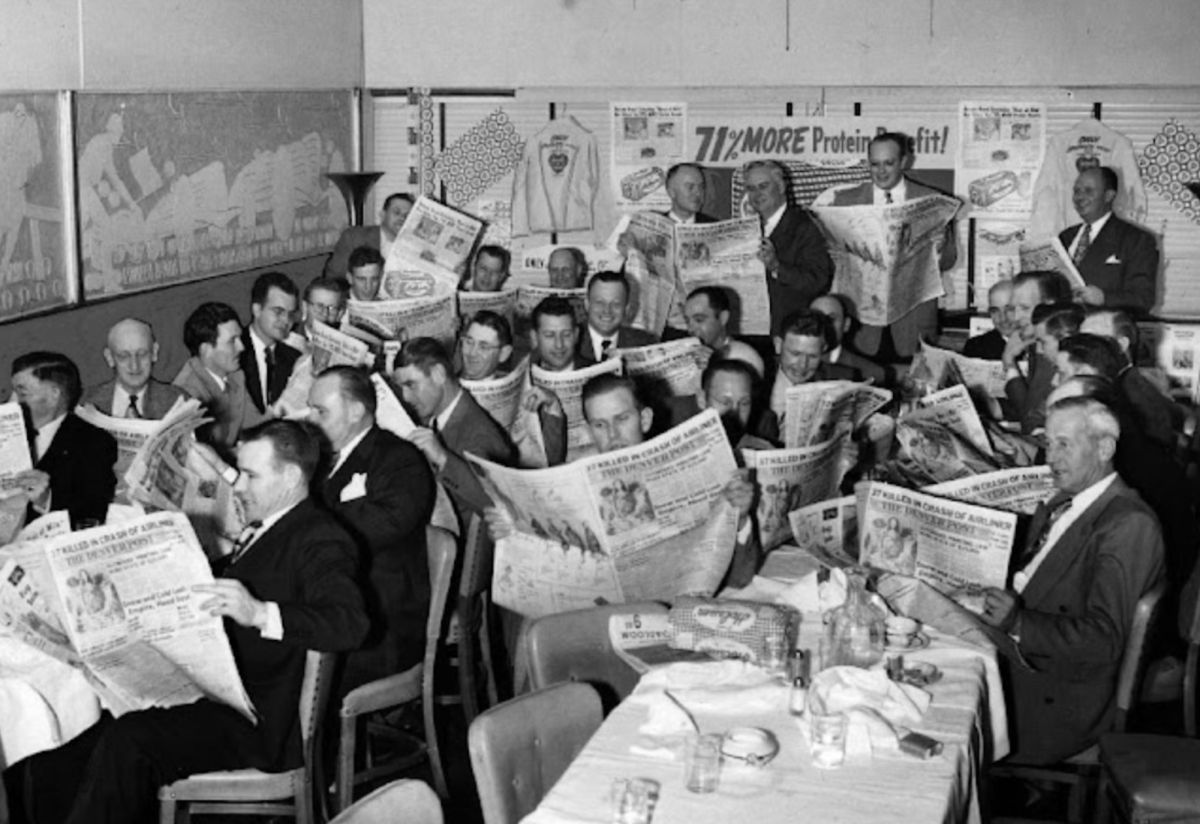
As society has grown more advanced, the spread of news and current events has become commonplace. According to Kristy Hess, a professor at Deakin University, and Robert E. Gutsche, a professor at Florida International University, journalism can help people build identities, relationships, and shared values. However, the stories that make the largest impact are not so accessible. Powerful institutions will go to great lengths to ensure that their unjust, and even malicious, actions remain hidden. This is where undercover journalism comes into play. According to Alan K. Chen and Justin Marceau, professors at the University of Denver Sturm College of Law, undercover journalism exposes truths that would otherwise remain out of public knowledge. Even if journalistic pieces are interpreted differently, awareness rises, which is the first step towards implementing change (Chen and Marceau 11-15).
The preposition of undercover journalism working as a device to increase understanding between different groups of people and inspire policy changes can parallel the ideas discussed in an article from the stimulus packet, “35 Years After the Berlin Wall Opened, Fragments of East Germany’s Border Remains,” written by the Associated Press. The Berlin Wall created a division between the people of East and West Berlin, prohibiting them from understanding the experiences of their opposing group. The wall symbolizes the lack of transparency the public had, especially regarding the media. It blocked Berliners from receiving information, much like powerful institutions hiding unethical behavior behind closed doors. The falling of the wall gave people freedom, reunification, and allowed for citizens to see beyond controlled narratives (Associated Press 46). Today, the wall remains in fragmented slabs, where muralists have used self-expression and representative art to depict the barriers that Berliners have overcome and changes that they have made as a result of the freedom of information. The article highlights two murals in particular from the so-called East Side Gallery, which is a popular place for street art on the Berlin Wall remains. The first mural is an array of blue, white, black, and gray handprints. This shows how the fall of the Berlin Wall allowed people of differing backgrounds and experiences to learn about each other and gain a greater sense of understanding, ultimately resulting in them being able to forge a more successful future together (Associated Press 48). Similarly, the second mural shows an opening through the wall, and a crowd of people rushing through and reuniting with one another (Associated Press 48). These ideas can be linked to undercover journalism because it exposes information hidden from the public, gives people the opportunity to put themselves in someone else’s shoes whose circumstances they were unaware of, and then eventually bond together and fight for systemic change. Undercover journalism acts as a catalyst for social change and understanding among diverse communities, as it exposes stories that are seldom told, hence leading to a more informed citizenry which can apply measures to prevent future injustices.
Upton Sinclair’s groundbreaking 1906 novel The Jungle exposed the horrific realities of the Chicago meatpacking industry. According to Rüdiger Graf, a historian at the Leibniz Center for Contemporary History Potsdam (ZZF) and lecturer at Humboldt University of Berlin, The Jungle provided vivid description of the unsanitary working conditions and exploitation of laborers. Sinclair disguised himself as a worker in order to gain the true story. Without his investigative journalism, the greater population would continue to be unaware that sick animals were being processed, chemicals were used to mask foul odors from the meat, workers suffering from tuberculosis would cough on the meat, and gruesome accidents would occur when human limbs would end up in products (Graf 902). Sinclair’s work resulted in widespread public outrage, pushing for new legislation such as the Meat Inspection Act and the Pure Food and Drug Act, which established regulations to prevent product adulteration and ensure the quality of meat (Graf 902). Additionally, due to the mass media revolution of the late 19th century, sensationalized reporting emerged, taking control of public opinion. The Progressive Era brought in a wave of reporters and news outlets committed to reform by spreading public awareness (Graf 904). Sinclair wanted to make a difference, he wasn’t driven by economic motivations. He wanted to write a novel that would have the same impact on “wage slavery” that Uncle Tom’s Cabin had on human slavery (Graf 911).
Sean Ewing, a professor in the Department of Political Science at the UCLA, argues that when the quality of journalism declines, citizens become less informed and engaged in local politics. This decline can be due to investment firms owning news outlets and focusing more on profits than public service. These ideologies underline the importance of Sinclair’s committed work, and how the quality of journalism must be preserved in order to strengthen its ability to preserve democracy. It is important to note that some people were skeptical of Sinclair’s work, including Forrest Crissey, a writer in the Saturday Evening Post. He accused Sinclair of sensationalism and that such evocative detail could only come from “a sick imagination.” However, it is important to note Crissey’s lack of evidence and his bias, given that he previously worked as a secretary for the father of J. Ogden Armour, a representative of the meatpacking industry (Graf 914).
Investigative journalism allows readers to step into a world they may be unfamiliar with, presenting shocking stories that have been hidden from public view. One example is Nellie Bly, a journalist who went undercover as a mental patient to expose corruption in the Blackwell’s Island Insane Asylum. She found a system tainted with abuse, cruelty, and torture. In her book, Ten Days in a Madhouse, Bly found that nurses acted violently towards patients. Specifically, she found that patients would be choked, kicked, and beaten (Bly 76, 81). She additionally witnessed nurses forcibly pulling out patients hair (Bly 91). Bly described the food as inedible, describing the meat as rotten, the bread dirty, and the tea tasting like metal (Bly 51-54). Patients were forced to clean themselves in ice-cold baths without the water being changed from person to person. Bly recalled that despite some patients having skin diseases, the water was not changed (Bly 55-58). Bly depicted the asylum as “freezing-cold,” stating that despite the fact that the heat was not turned on until October, patients were denied warm clothing, confined to their thin garments (Bly 67-75). The asylum building itself was very unsafe, and in the event of a fire, it was inevitable that nearly all 300 women would perish. This was because every door was locked separately, which the nurses would not stay to unlock, and the windows were barred (Bly 59). Bly also noted that some doctors performed superficial tests, such as feeling a patient’s pulse, and declaring them insane despite rational behavior. She also found that doctors occasionally acted inappropriately, such as engaging in flirtation during examinations (Bly 42-50). Furthermore, substances such as chloral or morphine were used to coerce patients into a stupor (Bly 88). Lastly, Bly noticed an abundance of psychological torture. She experienced a treatment where patients had to sit on straight-backed benches from 6:00 am to 8:00 pm without being able to talk or move. Bly argued that this treatment would make a sane woman “a mental and physical wreck” within two months (Bly 71). Many women were tricked into going to the asylum, being referred by doctors or friends who told them that they were going to a convalescent ward for rest (Bly 50). However, Nellie Bly stated that Blackwell’s Island Asylum was like a “human rat trap.” Once you arrived, it was near impossible to get out (Bly 117). Bly herself was only able to get out after ten days after her publisher sent a lawyer, claiming she had friends to take care of her (Bly 115).
According to Jean Marie Lutes, a professor of English and Gender and Women’s Studies at Villanova University, Bly’s book, Ten Days in a Madhouse helped to reshape people’s understanding about psychiatric institutions. By immersing herself in the world of asylum inmates, she discovered the unacceptable conditions they faced (Lutes 219). Bly’s book garnered a social uproar, and people started advocating for change and human rights in institutions. A direct financial response was a 57 percent increase in funding for the Department of Public Charities and Corrections, which included a substantial portion for the asylum where Bly was confined (Lutes 223). Also, two weeks after the publication of Ten Days in a Madhouse, there was a grand jury investigation to examine the conditions of the asylum. This was a significant step in achieving humane conditions for mental health patients and helping those who were wrongfully placed in these institutions (Lutes 223). In the late nineteenth century, when Ten Days in a Madhouse was published, mental health was a topic that was looked down upon. Bly’s portrayal of the harsh realities that these people faced helped to evoke sympathy and reform. Her work also challenged the authorities of medical professionals and societal norms that marginalized mental health patients (Lutes 222). Undercover journalism allows people to recognize inequalities they weren’t aware of before, which ultimately paves the way for change and the betterment of society (Chen and Marceau 11-15).
Investigative journalism has helped to draw attention to sexism in the workforce, as highlighted by Gloria Steinem’s legendary article, A Bunny’s Tale. Gloria Steinem, a journalist, activist, and co-founder of the National Women’s Political Caucus, went undercover as a Playboy Bunny, which was an employee of the Playboy Club, primarily serving as a cocktail waitress. They were marketed as “the most envied girls in America,” yet they were forced to maintain a certain image, wearing an uncomfortable costume and adhering to a strict set of behavioral rules and surveillance (Steinem 90). Under the pseudonym Marie Catherine Ochs, Steinem entered the world of the Playboy Bunnies, and discovered the truth behind the glamorized job. She was disturbed to find out that all Bunnies were required to undergo an invasive physical examination (Steinem 92). The club also employed undercover agents to spy on the Bunnies at work, ensuring that they were not dating customers and maintained the “Playboy image” (Steinem 114). As the physical appearance of the Bunnies was of utmost importance, employees were charged $2.50 daily to cover the cleaning of their costume. Additionally, they had to pay out of pocket for shoes and makeup (Steinem 93). The club also typically took a large portion of their employees’ tips (Steinem 114). Lastly, the sexism in this business was exemplified once again when Steinem was given a book to study known as the Playboy Club Bunny Manual, or informally known as the “Bunny Bible” (Steinem 93). It included a Demerit System which listed penalties for infractions such as chewing gum, having messy hair, or failure to keep a makeup appointment. If these superficial rules were not adhered to, employees could be dismissed (Steinem 114).
Through discussion and acquiring information that is typically inaccessible, journalists are able to shape audience discourse, eventually inspiring activism that can invoke reform (Hess and Gutsche 483-487). In her article from the stimulus packet, “Spaces of Consumption, Connection, and Community: Exploring the Role of the Coffee Shop in Urban Lives,” Jennifer Ferreira, a researcher at Coventry University, discusses how when people have similar experiences or routines, they may find that they have more in common with others than they think. Coffee shops are identified as “third places,” which are separate from home and work. These places can expand one’s understanding of the world, as they can connect with people there who have different backgrounds. Ferreira also states that coffee shops can provide the community with a place to engage in “unregulated talk, and therefore the potential for connections to be made between people who would not otherwise come together” ( Ferreira et al. 9). This is directly related to the impact that follows undercover journalism, as it creates a foundation for public discussion and amplified understanding between different groups, ultimately paving the way for systemic reform (Chen and Marceau 16-20).
While the importance of undercover journalism has remained evident due to its results, opinions of the practice are varied. According to Willa McDonald and Bunty Avieson, professors at the University of Sydney, Australia, investigative journalism is deceptive, and can pose a risk of selective storytelling and sensationalism. Additionally, McDonald and Avieson argue that the cornerstones of journalism are based on honesty—lying about one’s identity is the opposite of that (McDonald and Avieson). However, this can easily be refuted by stating that undercover journalism exposes truths that would otherwise remain inaccessible. Certain institutions will go to great lengths to conceal realities such as corruption and abuse. Even though the credibility of undercover journalists can be questioned at times, their one key benefit must be acknowledged: making the invisible visible (Chen and Marceau 1-5).
Today, we must prioritize the funding of journalism and the media. If there are more committed, active journalists in the field, society may be confronted with more injustices that have been kept in the dark. A wider spread of knowledge will lead to a more active population; one that is not afraid to challenge authority and make a change.
Works Cited
Bly, Nellie. Ten Days in a Mad-House. Norman L. Munro, 1887, pp. 1-30, ia801500.us.archive.org/23/items/3304680.med.yale.edu/ten%20days_text.pdf. Accessed 30 Mar. 2026.
Chen, Alan K, and Justin Marceau. Truth and Transparency. Cambridge University Press, 31 Aug. 2023, pp. 1–20.https://books.google.com/books?id=hN_LEAAAQBAJ Accessed 22 March. 2026.
Ewing, Sean. “Profit over Public Good: The Impact of Investment Firm Ownership on Local News and Political Behavior.” Political Communication, 12 Jan. 2026, pp. 1–38, https://doi.org/10.1080/10584609.2025.2601736. Accessed 22 March. 2026.
Ferreira, Jennifer, Carlos Ferreira, and Elizabeth Bos. “Spaces of Consumption, Connection, and Community: Exploring the Role of the Coffee Shop in Urban Lives.” Geoforum, vol. 119, Feb. 2021, pp. 21–29.
Graf, Rüdiger. “Truth in the Jungle of Literature, Science, and Politics: Upton Sinclair’s The Jungle and Food Control Reforms during the Progressive Era.” The Journal of American History, vol. 106, no. 4, 2020, pp. 901–922. JSTOR, https://www.jstor.org/stable/48593279. Accessed 28 Mar. 2026.
Hess, Kristy, and Robert E. Gutsche. “Journalism and the “Social Sphere.”” Journalism Studies, vol. 19, no. 4, 26 Oct. 2017, pp. 483–498, https://doi.org/10.1080/1461670x.2017.1389296. Accessed 22 March. 2026.
Lutes, Jean Marie. “Into the Madhouse with Nellie Bly: Girl Stunt Reporting in Late Nineteenth-Century America.” American Quarterly, vol. 54, no. 2, 2002, pp. 217–253. JSTOR, www.jstor.org/stable/30041927. Accessed 22 March. 2026.
McDonald, Willa, and Bunty Avieson. “Journalism in Disguise: Standpoint Theory and the Ethics of Günter Wallraff’s Undercover Immersion.” Journalism Practice, vol. 14, no. 1, 26 Mar. 2019, pp. 34–47, https://doi.org/10.1080/17512786.2019.1596752. Accessed 22 March. 2026.
Steinem, Gloria. “A Bunny’s Tale.” Show Magazine, May 1963, pp. 90–94,https://undercover.hosting.nyu.edu/files/original/5c9de8d1db51cede1395f6d6fa480ca24e872b76.pdf Accessed 22 March. 2026.
“35 Years After the Berlin Wall Opened, Fragments of East Germany’s Border Remain.” Associated Press, 7 Nov. 2024.