
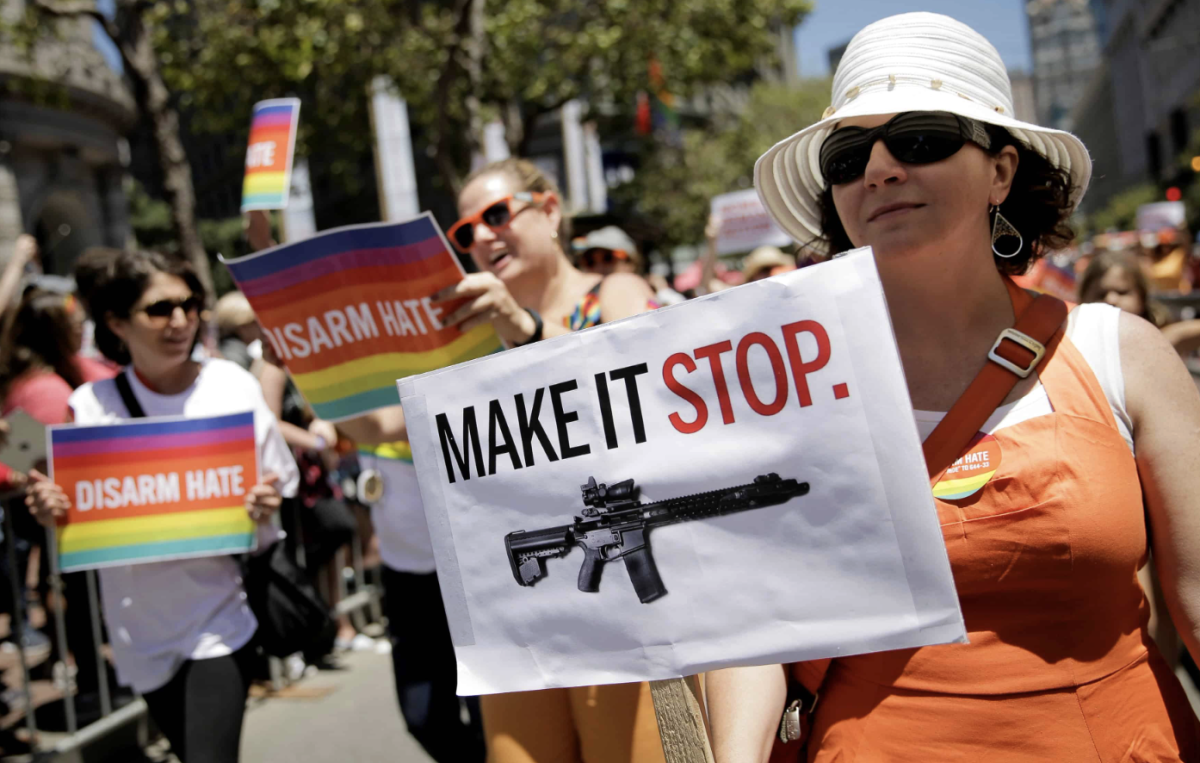
The United States experiences around 46,000 gun fatalities yearly, translating to over 125 deaths per day. About half of these deaths occur as a result of suicides, while the rest occur through homicides and accidental discharges of guns. Government statistics in the period from 2000 to 2022 indicate that at least 1,300 cases of school shootings have taken place in public and private educational institutions in the country, leaving numerous victims dead and injured (over 1,000 victims). The problem of gun violence in the United States has become one of the most controversial issues, involving the questions of legality and ethics. While most developed countries have enacted gun control laws, the United States has been unable to make progress towards developing an effective gun policy because of ethical dilemmas related to the moral right to bear arms as opposed to the moral responsibility to save lives. Although the Second Amendment guarantees individual liberty, ethical frameworks challenge whether unrestricted access to lethal weapons can be justified in the face of widespread and preventable harm. As a result, gun legislation must be understood not only as a political issue, but as a deeply ethical one.
This ethical framework is particularly effective for analyzing gun policy because the debate fundamentally centers on a conflict between outcomes and obligations. Gun control is not simply about what is legally allowed, but about whether preventing harm justifies limiting individual freedoms. Utilitarianism and deontology directly address this tension: one prioritizes the greatest overall good, while the other emphasizes the protection of individual rights. Because gun policy sits at the intersection of these competing values, these frameworks provide the most relevant lens for evaluating how laws should balance public safety with constitutional protections.
These two contrasting ethical paradigms define the public’s view on gun policies. In utilitarian ethics, the most important principle is to reduce harm while maximizing society’s well-being. On the other hand, in deontological ethics, rights and duties are paramount. This difference makes it very hard to develop policies because individuals differ on what ethical theory should be employed in making policies concerning guns. There are those who support constitutional freedom, while others advocate for gun regulations to minimize unnecessary deaths. This tension raises a central question: how can gun laws protect public safety without infringing on constitutional rights?
From a utilitarian perspective, moderate gun control is justified by its potential to reduce harm and improve overall societal well-being. A peer-reviewed study analyzing national data demonstrates a strong correlation between gun prevalence and increased rates of suicide and mass shootings (Mujtaba et al.). Because this research is based on large-scale statistical analysis and published in an academic journal, it is a credible source for identifying national trends. However, while the study establishes correlation rather than direct causation, the consistency of the pattern across data sets suggests that access to firearms plays a significant role in these outcomes. This implies that reducing access in high-risk situations would likely decrease preventable deaths, meaning that inaction is not a neutral position but a choice that allows harm to continue.
Ethical arguments based on consequences further support this reasoning. Policies should be evaluated based on their outcomes, meaning that restrictions can be justified if they reduce suffering (Boylan). This perspective reflects utilitarian logic: when individual freedoms lead to measurable harm, limiting those freedoms may produce a greater overall benefit. In practice, inconsistent gun laws across states undermine this goal. Individuals can bypass stricter regulations by purchasing firearms in states with weaker laws, which reduces the effectiveness of safety measures (Rathbun). Because this argument is grounded in an analysis of legal systems, it highlights how structural inconsistencies prevent ethical intentions from translating into real-world outcomes.
However, implementing these policies is complicated by political and economic factors. Research examining gun politics suggests that lobbying and entrenched ideological beliefs often obstruct safety-driven legislation (Esposito and Finley). While this analysis provides valuable insight into systemic barriers, it may reflect a critical perspective on political structures, meaning its conclusions should be considered alongside other viewpoints. Even so, the evidence suggests that ethical responsibility does not lie solely with individuals, but also with institutions that shape policy outcomes. Studies on moral responsibility argue that harm prevention requires systemic protections, such as oversight and enforcement, rather than relying only on individual behavior (Barnhart et al.). This reinforces the idea that society holds collective responsibility for reducing foreseeable harm (Anderson et al.).
In contrast, the deontological perspective emphasizes the importance of protecting individual rights, even when doing so may lead to negative consequences. The Second Amendment is often interpreted as guaranteeing the right to bear arms, and restricting this right can be viewed as both a legal and ethical violation (Weisberg). While utilitarian arguments suggest that rights may be limited when they cause harm, this directly conflicts with the deontological view that rights should not be compromised based on outcomes. This disagreement highlights a fundamental ethical divide: utilitarian reasoning prioritizes consequences, while deontological reasoning prioritizes moral duties. As a result, policies that appear ethically justified from one perspective may be viewed as violations of fundamental rights from another.
This conflict is further reinforced by political ideology. Many individuals frame the gun control debate in terms of rights rather than outcomes, making them less receptive to utilitarian arguments (Esposito and Finley). Additionally, shifting responsibility from individuals to institutions may weaken personal accountability, raising concerns about overreliance on regulation (Barnhart et al.). Policies that are overly restrictive or inconsistently applied can also undermine public trust and create perceptions of unfairness (Rathbun). Even research that supports moderate regulation acknowledges that policies must respect the rights of lawful gun owners to remain ethically and legally valid (Mujtaba et al.). These concerns highlight the importance of ensuring that gun laws do not overreach or violate fundamental liberties.
An effective approach to gun legislation must therefore integrate both utilitarian and deontological perspectives. Policies such as universal background checks, licensing requirements, and safe-storage laws represent a balanced approach, as they aim to reduce harm while preserving individual rights (Rathbun). These measures address utilitarian concerns by limiting access in high-risk situations, while still allowing lawful ownership in accordance with constitutional protections. At the same time, they reflect deontological principles by avoiding broad restrictions that would undermine fundamental rights.
The implementation of ethically sound policies is not without problems either. There are instances wherein political opposition, lobbying, and strong ideological views make the implementation of such legislation difficult (Esposito and Finley). The establishment of uniform policies across states can also present legal obstacles (Rathbun). Despite these problems, policymakers must consider a certain level of moral responsibility to mitigate any unnecessary injury that could be avoided, especially when backed by scientific evidence (Mujtaba et al.).
Ultimately, American gun policy can be structured to protect public safety without violating the Second Amendment by adopting balanced and carefully designed regulations. By integrating utilitarian goals of harm reduction with deontological commitments to individual rights, policymakers can create solutions that address both ethical concerns. Although challenges remain, this combined ethical approach demonstrates that public safety and constitutional liberty need not be in conflict but can instead be reconciled through thoughtful policy.
Works Cited:
Weisberg, Robert et al. The Utilitarian and Deontological Entanglement of Debating Guns, Crime, and Punishment in America. 2003, p. 436. Accessed 27 Jan. 2026. https://chicagounbound.uchicago.edu/cgi/viewcontent.cgi?referer=&httpsredir=1&article=5258&context=uclrev
Mujtaba, B. G., et al. “The Relationship of Suicides, Guns and Mass Shootings in the United States: An Ethical Dilemma.” SocioEconomic Challenges, vol. 4, no. 3, Academic Research and Publishing U.G., 2020, pp. 77–92, https://doi.org/10.21272/sec.4(3).77-92.2020. Accessed 27 Jan. 2026.
Esposito, Luigi, and Laura Finley. “Beyond Gun Control: Examining Neoliberalism, Pro-Gun Politics and Gun Violence in the United States .” Research Gate, Apr. 2014, www.researchgate.net/profile/Luigi-Esposito-5/publication/269863090_Beyond_Gun_Control_Examining_Neoliberalism_Pro-gun_Politics_and_Gun_Violence_in_the_United_States/links/567192f708ae90f7843f368b/Beyond-Gun-Control-Examining-Neoliberalism-Pro-gun-Politics-and-Gun-Violence-in-the-United-States.
Boylan, Michael. “Gun Control in the United States: Ethical Perspectives for the Twenty-First Century Vol. 408 P 17-21.” Lippincott Williams & Wilkins, Inc., 2003, d1wqtxts1xzle7.cloudfront.net/102868604/GunControlBoylan-libre.pdf?1685554348=&response-content-disposition=inline%3B+filename%3DGun_Control_in_the_United_States_Ethical.pdf&Expires=1769484203&Signature=KQ8FjRUL0C3F6KCu30LlVDzVQ~DLmLPdhq2naHy6riVTItfs0ROudddTKskkAW~oorzvwt39flVgrMBT8NbwiHIDHDNNEk2-izm-2L6Cx-O7WrHHBM~n5RPfmrL1d85yOo8b-18nM00xOKhy3pvEnhoZKOYxaePvulmA3Tnb3qwBAjpEW4plDu8zukZQd~v7N9g5uGgANVJLzk7T1ApjlvjddKA6ulPoW2oA895MaxBxj~nm6NdzhsVd1VvBzwPLaXk-LdQUv6QCgO87Jg-pAcX8xW7CHTI9BPxx~3YzygC~a89D1pMn5HZi7-57aiSTvHPNSuu360LlJVUxig8NnA__&Key-Pair-Id=APKAJLOHF5GGSLRBV4ZA.
Rathbun, Caleb. “Ethics of Uniform Gun Control.” Ratio, Wheaton Academy, 2019, pp. 70–72, wheatonacademy.org/wp-content/uploads/2019/11/Ratio-Vol-1.3-web.pdf#page=72.
DeGrazia, David. “The Case for Moderate Gun Control.” Project Muse, The Johns Hopkins University Press, Mar. 2014, philosophy.columbian.gwu.edu/sites/g/files/zaxdzs5446/files/2023-01/degrazia_guncontrol-1.pdf
Barnhart, Michelle, et al. “Morality Appraisals in Consumer Responsibilization.” Journal of Consumer Research Inc., 12 June 2023, research.ebsco.com/c/c5rtnt/viewer/pdf/txu5if7tej.
Anderson, Joe, et al. “Edinburgh Research Explorer Gun Owners, Ethics, and the Problem of Evil: A Response to the Las Vegas Shooting.” Journal of Ethnographic Theory, vol. 7, no. 3, 2017, pp. 39–65, https://doi.org/10.14318/hau7.3.003. Accessed 16 Jan. 2026.