
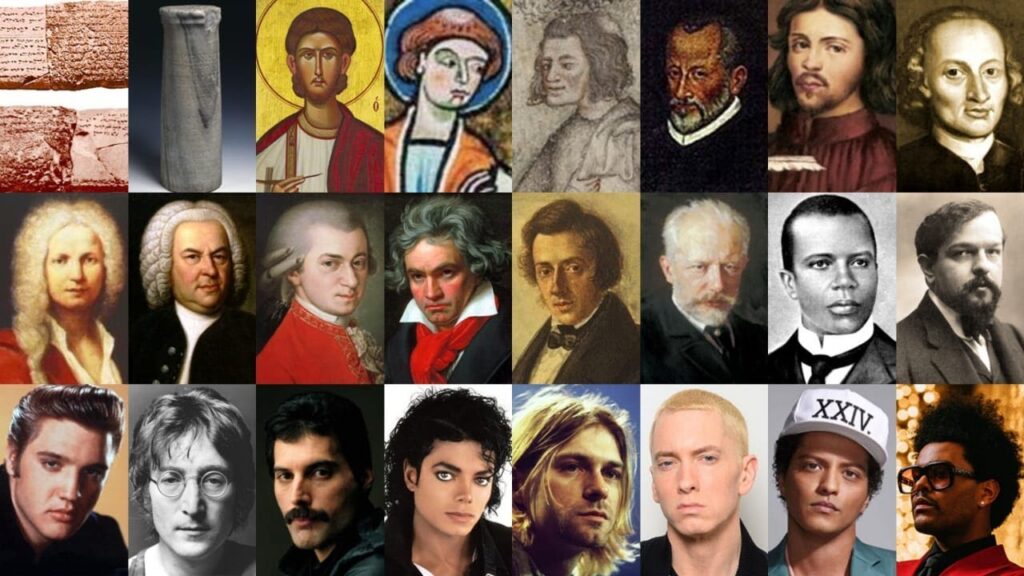
We’ve all heard it before, the all-too-common and often tired refrain, “Music just isn’t what it used to be.” It doesn’t matter the decade or the demographic; many believe that music has lost its soul. But let’s be honest—music is always changing. Music evolves along with technology, culture, and society as a whole. It has the ability to define eras and transport listeners back to a certain point in time. Dismissing modern music as “worse” misses the bigger picture. Music isn’t worse, and it’s not better—it’s simply different, and that difference is worth appreciating.
From the jazz of the 1920s, to the synth-pop of the 1980s, to the EDM craze of the 2010s, each decade has a signature sound. Radio stations like ‘70s on 7 from SiriusXM allow listeners to focus on their preferred decade, limiting their exposure to modern music. Most of the time, mainstream stations like Hits 1 and TikTok Radio (also on SiriusXM), are limited to a few songs from select artists, pushed to become the next big single. We can all remember the incessant beat of “Dance Monkey” by Tones and I, blasting through the car radio 24/7 circa 2019. “Uptown Funk” by Bruno Mars, “End of Beginning” by DJO, and “Happy” by Pharrell Williams have all met the same overplayed fate. These songs often follow a specific formula: lyrics are easy to repeat, beats are easy to dance to, and in the age of social media, they often contain a tagline that can be repurposed to fit viral content. It’s easy for an adult whose exposure to modern music is limited to the “current hits” radio station, to listen to these songs and complain about the repetitive nature of music on the radio nowadays. But let’s not forget that this is not a new phenomenon: “Hotel California” by the Eagles, “Bohemian Rhapsody” by Queen, and “Wonderwall” by Oasis have all become radio staples. The first step to discovering the wide range of modern music comes with looking beyond the radio; something easier now than ever with platforms like Spotify and Apple Music. Since 2008, Spotify has amassed over 100 million tracks, and an estimated 11 million artists as of April 2025. Countless lists and reviews are made by musical review outlets like Rolling Stone and Pitchfork. When naysayers make the conscious choice to search for songs, without prejudice, and go beyond the mainstream, it’s very likely their complaints about modern-day uniformity and repetition throughout music will be torn down.
A common criticism of modern music, particularly hip-hop and rap, is that it often emphasizes superficial themes like wealth and status, lacking the emotion found in older songs. While there is merit to these complaints, the truth is that every generation has had its share of “shallow” music. Both “Material Girl” by Madonna and “Girls” by Beastie Boys are centered around materialism and objectification– but this doesn’t erase their status as classics. In fact, the criticism of societal standards has become a new theme in music: as seen in “What Was I Made For?”, the Grammy winning song by Billie Eilish from the Barbie movie. Modern artists like Adele and Beyoncé are renowned for their powerful voices and incredible ranges, much like Cher and Aretha Franklin in the ‘60s and ‘70s. The double standard of modern music is unfair. Not every song has to be profound and emotional—and some are simply made to be “catchy.” Despite attempts to dispel musicians’ talents as “autotune,” singers have consistently proven themselves at live shows and concerts. Major artists such as Taylor Swift and The Weeknd have expanded on the spectacles of live music, and the construction of new stadiums like the Sphere in Las Vegas has reimagined performance altogether.
Ultimately, one’s preferred music genre and era often stem from a variety of influences, namely nostalgia and cultural context. Modern music is far more diverse than the hits repeated on the mainstream radio, and it’s unfair to judge it based solely on these selective examples. Lessons can be learned from each generation of music, as audiences can begin to understand specific styles in music production and lyricism. Music doesn’t get better or worse, it simply changes to reflect society and popular culture. Instead of getting caught up in comparison, listeners should seek to explore different generations and learn to find value in each style of music. After all, it is because of these differences that music has endured through time, offering people a place to connect and learn, from generation to generation.